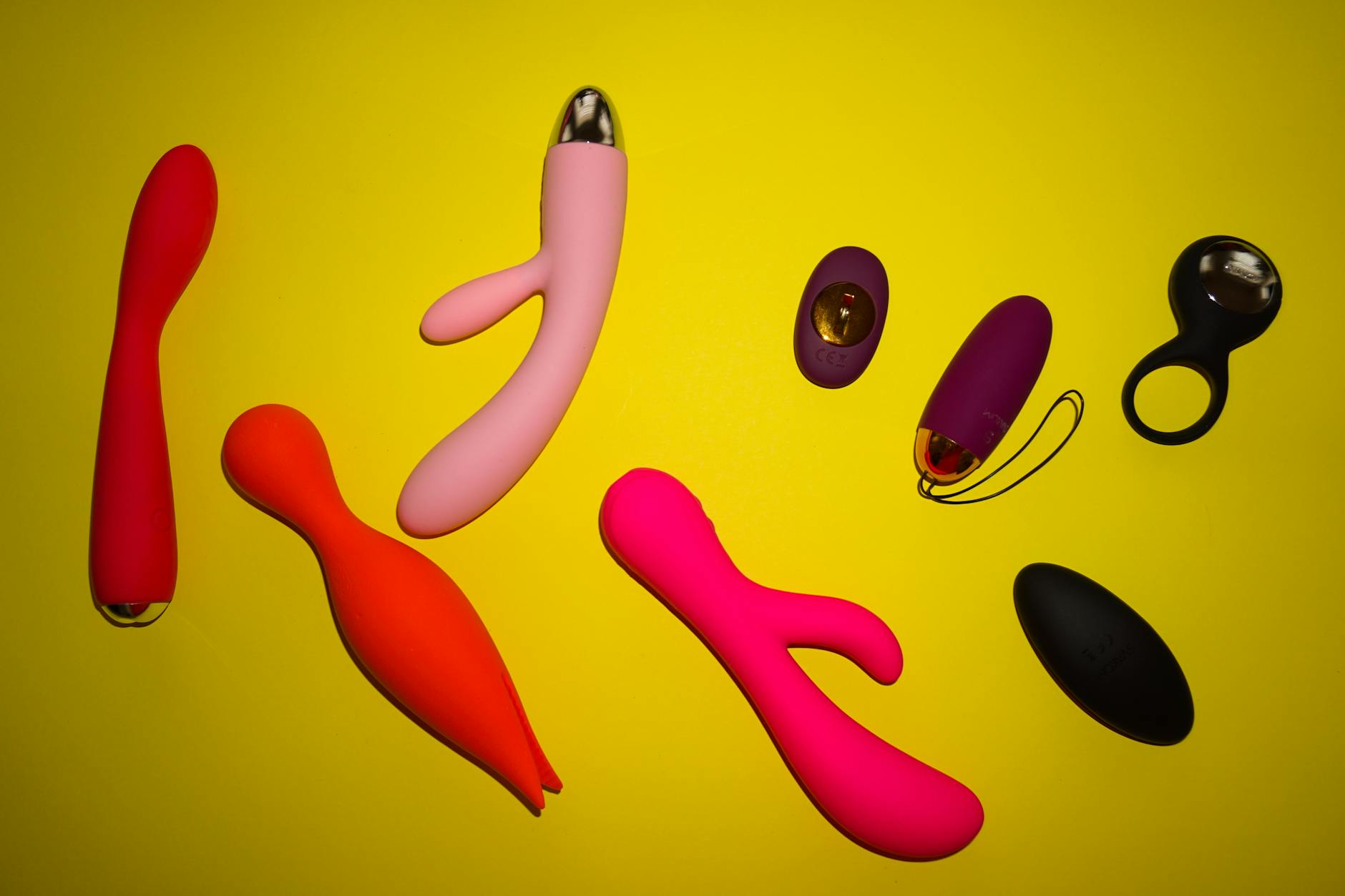
Here's the thing about vibrator patterns
You don't find the right lemon vibrator pattern in five minutes. Some people do. Most don't. And that's not because you're broken or because lemon clitoral vibrators are confusing to use. It's because your body is learning a new language, and your brain is catching up slower than your nervous system.
The first time someone uses a lemon vibrator, they often expect the same plug-and-play experience as a traditional vibrator. Press on, vibration happens, done. Except lemon suction toys work differently. The sensation builds. The patterns feel distinct. Your body responds to rhythm in ways it hasn't before. That gap between expectation and reality is where the learning curve lives.
Why suction patterns feel different than vibration
A standard vibrator creates rapid mechanical oscillation. Your tissue responds immediately, your nervous system recognizes it instantly, and pleasure builds in a fairly predictable arc. Lemon vibrators use air-pulse technology. Suction creates a seal and releases it in a rhythm, which feels more like a wave than a buzz.
That difference matters neurologically. Your clitoris has roughly 8,000 nerve endings, and they're organized in clusters. Traditional vibration stimulates broadly across those clusters. Suction concentrates stimulation in the center and creates a pulling sensation that travels outward. It's a completely different neural pathway lighting up.
When you switch from one sensation type to another, your brain needs time to map the new input. That's not a learning disability. That's how embodied learning works. Your body has spent years (maybe decades) understanding one kind of stimulation. A new pattern requires recalibration.
The rhythm discovery phase is actually crucial
One reason the lem vibrator learning curve exists is that people are often looking for the exact same pattern that worked with their last toy. But here's what actually matters: you're not looking for what worked. You're looking for what works now, with this specific sensation type.
I work with clients who say things like, "I found my pattern on the third try." And I work with clients who take six months. Both are completely normal. The ones who rush to a conclusion often find out later that they settled for "good enough" instead of "oh my god, how did I live without this."
Taking time to explore patterns is not wasted time. It's data collection. Each pattern teaches your body something. Pattern 1 might feel gentle and too slow. Pattern 2 might feel sharp and overwhelming. Pattern 3 might be close but slightly off-rhythm. By the time you reach pattern 6 or 8, you're not starting from zero. You're refining.
Speed matters more than you think
One specific thing I notice with people discovering lemon sexual toys for the first time is that they often assume the fastest or most intense pattern is "the best." It rarely is. The best pattern is typically somewhere in the middle of the range, because it allows for the most nuanced neural response.
If you jump straight to pattern 8 on a lemon clitoral vibrator, you're flooding your nervous system. Your tissue might respond, but your brain doesn't have time to integrate the sensation. It becomes background noise instead of pleasure. The sweet spot is usually pattern 3, 4, or 5, where your nervous system can actually track what's happening and build anticipation.
That's why the learning curve exists. You have to experiment slowly enough to let your body's actual preferences emerge instead of just chasing intensity.
Sensation mapping takes real time
Here's something most sex toy guides skip: your clitoris isn't one monolithic pleasure zone. It's got hot spots. Angle matters. Pressure matters. The position of your legs matters. Whether you're aroused for two minutes or twenty minutes matters.
When you're using a hello nancy lemon vibrator, you're not just finding the right pattern. You're also finding the right angle, the right pressure, the right moment in your arousal cycle. That's three variables instead of one. No wonder it takes longer than a plug-and-play toy.
The learning curve isn't steep because lemon vibrators are hard to use. It's because they're sophisticated enough to respond to your body's actual feedback. That's the whole point.
What helps actually speeds things up
If you're getting frustrated with the discovery phase, these three things genuinely help:
Take arousal seriously before you start. Don't just turn on the lem vibrator and expect your body to catch up. Spend 15 to 20 minutes on foreplay, fantasy, or whatever gets you mentally engaged first. A well-aroused body responds to patterns more quickly because the nerve endings are already primed.
Start at pattern 1 or 2 every time, at least for the first week. I know it feels slow. Do it anyway. Your nervous system needs to build a baseline. Once you've felt patterns 1 through 5 at least twice, you can skip ahead.
Stay with one pattern for at least 60 seconds. Most people spend 10 seconds on a pattern, feel nothing, and switch. Your body needs time to recognize the rhythm and start responding. Give it a full minute. You'll learn way faster.
The mental block is often bigger than the physical one
A lot of the learning curve is actually psychological. You've been told that "finding your pattern" should be intuitive. You think good sex toys are supposed to feel amazing immediately. Then you spend 20 minutes with a lemon clitoral vibrator feeling... okay. Not bad. Just not earth-shattering. So you assume you're doing it wrong.
You're not. You're in the calibration phase. This is normal. The people reporting earth-shattering experiences after three tries are either exceptionally lucky or they waited longer than they're admitting.
The learning curve isn't a flaw in lemon vibrators. It's the price of pleasure that actually listens to your body.
When something feels genuinely off
There's a difference between "still exploring" and "something's wrong here." If you've spent 30 minutes across several sessions with a lemon vibrator and the sensation feels sharp, painful, or irritating rather than numbing, that's worth investigating.
You might need more lubricant. The seal might not be right for your anatomy. You might need a lower intensity level overall. Or you might actually prefer a different toy entirely, and that's fine too. But give yourself at least four or five intentional tries before concluding it's not for you.
One more thing: if you feel numbness (not sensation, actual numbing), you're probably going too intense too fast. Back off the intensity level, use it for shorter sessions, and give your tissue recovery time between uses. That's not the toy failing. That's your body asking for a gentler approach.
The patience payoff is real
I've worked with clients who struggled with the lem vibrator learning curve for six weeks and then reported some of the most consistent, satisfying orgasms of their lives. The ones who rushed? They often went back to traditional vibrators or bounced through three different toys looking for instant magic.
That patience has a compound effect. Once you know your pattern, your body remembers it. Arousal time drops. Pleasure deepens. You develop a kind of feedback loop where you understand your own response better. That knowledge transfers to partnered sex, self-pleasure, everything.
The learning curve isn't a bug. It's actually evidence that lemon sexual toys are working exactly as designed. They're responsive enough to require attunement. That's what makes them worth the wait.
FAQ
How long does it actually take to find your lemon vibrator pattern?
Anywhere from three tries to six weeks. Most people land on a favorite pattern within two to three weeks of regular exploration. "Regular" means at least three times a week, giving yourself at least 15 minutes each time, and trying two or three patterns per session. The timeline matters less than the intentionality.
Is there a way to speed up finding my lemon clitoral vibrator rhythm?
Yes. Start fully aroused, not neutral. Begin at low intensity patterns (1-3) and stay with each for at least 60 seconds. Explore one or two patterns per session rather than cycling through all eight. Your nervous system learns faster when you're systematic instead of frantic.
Should I feel something immediately when I use a lemon sucker?
Not necessarily. Immediate sensation is great, but it's not the goal. The goal is finding what feels good to your specific body. Some people report gentle building sensations that take 20 to 30 seconds. That's completely normal and often more pleasurable than shock-and-awe intensity.
Why does pattern 5 feel better one day and pattern 3 feel better another day?
Because your body isn't static. Hormone levels shift. Stress changes arousal capacity. How long you've been foreplay-ing matters. Your general arousal baseline varies. The same lemon vibrator pattern will genuinely feel different depending on your physical and emotional state. That variability is normal, not a sign something's wrong.
Can I use lemon sexual toys if I have reduced clitoral sensitivity?
Yes. In fact, suction-based stimulation often works better for people with reduced sensitivity than traditional vibration does, because the pulling sensation travels deeper into the tissue. But the learning curve might be longer because you're also calibrating for sensitivity level. Start at patterns 1 and 2, stay longer, and don't rush the discovery phase.
What if I've tried for weeks and still haven't found a pattern that feels great?
First, make sure you're actually aroused when you explore. Second, consider that angle and position matter as much as pattern. Third, you might be a better fit for a different toy entirely, and that's fine. Not everyone clicks with suction-based toys. That's not a failure. It's data. If you want to keep exploring, chat with the team at Hello Nancy about your experience and what you've tried. Sometimes a small adjustment makes the difference.
The real reason you're not finding your pattern yet
You're exploring a new sensation, and your body is learning something genuinely new. That takes time. You're also probably putting pressure on yourself to find the "right" answer instantly instead of letting the discovery be pleasurable itself. The best version of this process is patient, curious, and low-stakes.
Give yourself permission to take weeks to find your pattern. Your lemon vibrator isn't going anywhere. Neither is your pleasure. The learning curve isn't something to power through. It's where the real magic lives.
If you want to talk through your experience or get personalized guidance on exploration, reach out. That's what we're here for.