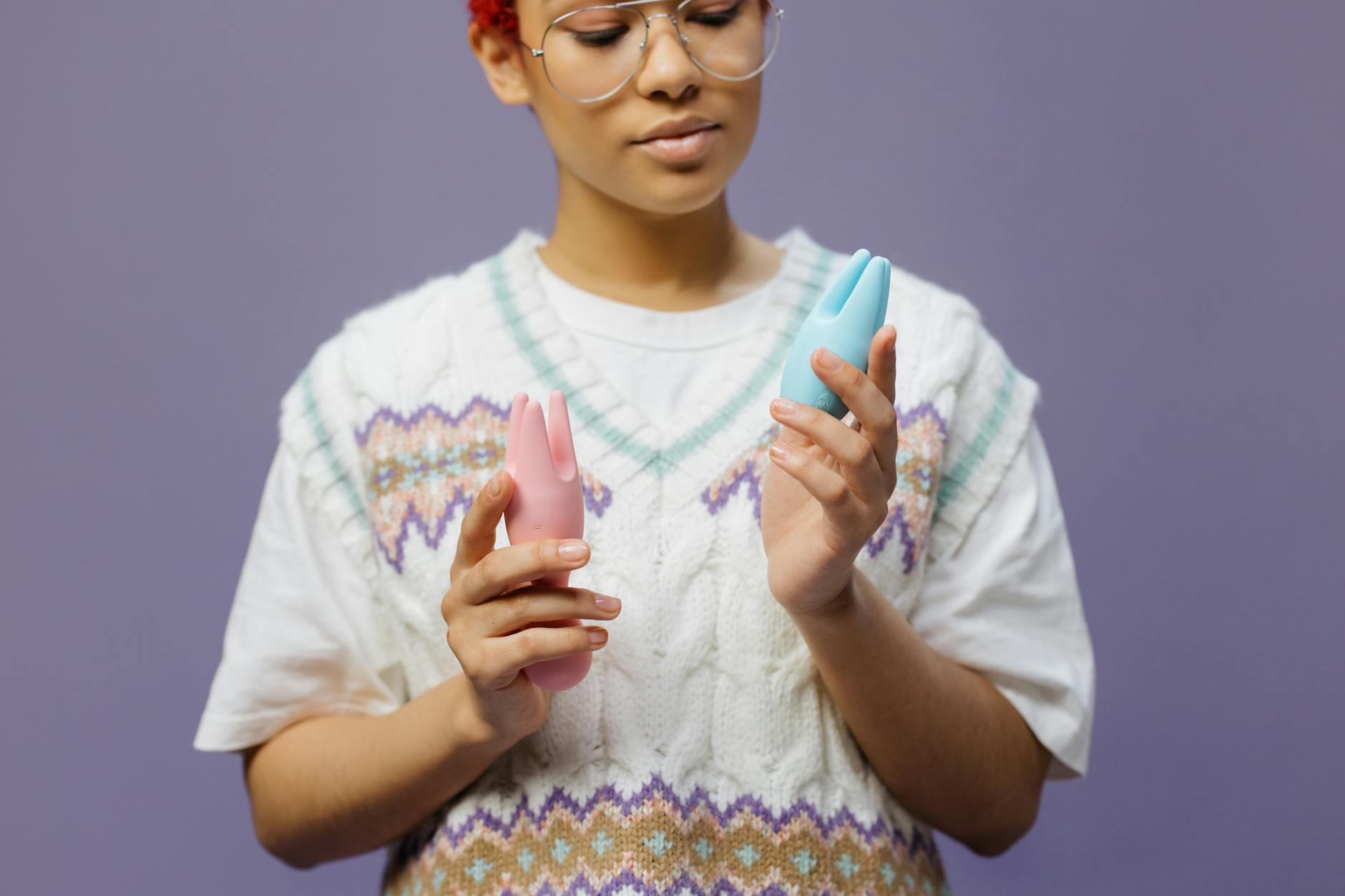
The thing nobody explains about postmenopause and pleasure
Here's what I hear most often in sessions: "Everything I read says sex gets worse after menopause. But I don't feel worse. I feel different." That distinction is everything.
Postmenopause changes the physical landscape. It does not destroy it. Estrogen drops, tissue thins, lubrication shifts, and arousal takes longer to build. Testosterone falls too (yes, people with ovaries produce it, and yes, it matters for desire). But the neural pathways for pleasure? Still there. The clitoral nerve density? Unchanged. Your brain's capacity for orgasm, sometimes more intense than ever? Absolutely intact.
I've watched countless clients discover their most satisfying orgasms of their lives after 50. This isn't polite encouragement. It's a pattern I've tracked for decades.
What hormonal shifts actually change
When estrogen drops during and after menopause, the vaginal tissue becomes thinner and more fragile. The labia minora may shrink slightly. Lubrication reduces naturally. The clitoris doesn't shrink, but the surrounding tissue does, which can shift how stimulation feels. Recovery time between orgasms sometimes lengthens.
The pelvic floor loses estrogen support, which can alter the sensation of orgasm itself. Some people describe it as shallower. Others find it more localized, concentrated in specific nerve pathways rather than radiating through the whole body. Both are normal. Neither is wrong.
Here's what doesn't change: arousal capacity, orgasmic ability, or sexual desire (unless depression, medication, or relationship strain separately factor in).
Why lemon vibrators excel after menopause
Lemon clitoral vibrators, especially air-suction designs like the Lem, work particularly well for postmenopausal bodies for three concrete reasons.
First, they don't rely on direct friction. Traditional vibrators buzz against tissue. Lemon vibrators use gentle suction and pulsing air patterns that stimulate the clitoral nerve bundle without the intense mechanical pressure that can feel too sharp or abrasive on thinner tissue. You get powerful stimulation without the discomfort.
Second, the intensity ramps smoothly. Lower suction levels (patterns 1 and 2) let you build arousal gradually. Your tissues warm up, blood flow increases, and natural lubrication can develop before you move to medium or higher intensities. This is a game changer when arousal takes longer.
Third, lemon sexual toys are intuitive to control. A single button cycles through patterns. You're not fumbling with multiple settings or trying to angle the device at the exact right angle. You hold, you feel, you adjust. That simplicity matters when you're learning how your body responds in a new way.
The warm-up shift you need to know about
Arts and culture changes after menopause. Mental foreplay becomes crucial.
Before menopause, many people could go from zero to aroused in minutes. Postmenopause, budget 15 to 25 minutes just for arousal to build naturally. This is not a dysfunction. It's a biological shift. And honestly? It's an invitation to slow down.
Start with lower intensity settings. If you've never used a lemon clitoral vibrator before, begin at pattern 1 or 2. Let yourself feel the sensation without rushing to climax. Notice what's different from your 40s. Notice what still feels familiar. Some women report that this slower buildup creates more sustained pleasure, longer climaxes, and deeper satisfaction than the quick hits they knew before.
Think of it as a longer foreplay session with yourself. Your brain needs time to catch up to your body's signals. Skin sensitivity might feel different. Nerve endings may respond better to sustained, gentle pressure than quick pulses. Give yourself the time to discover that.
Lubrication and comfort adjustments
Don't skip lube. I say this not because you're broken, but because thinner vaginal tissue benefits from it. A water-based lubricant reduces friction, increases comfort, and lets you use your lemon vibrator for longer without irritation or discomfort.
Apply lube generously to the device and your external genitals. Let it sit for a moment. Water-based lubes feel lighter than oil-based options, and they're safe for silicone toys (silicone-based lubes can degrade silicone). Some people prefer warming the lube slightly in their hands first. That small detail can make the experience feel more sensual and less clinical.
If you notice any sharp pain, stop. Pain is not normal and should be evaluated by a gynecologist. Genitourinary syndrome of menopause (GSM) is real and treatable. A topical estrogen cream can transform tissue health in weeks. There's no reason to push through discomfort.
The mental and emotional piece
Physiology is part of the picture. The other part is often silence.
Postmenopause often coincides with other life shifts. Kids grown, career changes, relationship renegotiation, grief, loss of identity. The temptation is to assume any change in sexual pleasure is purely hormonal. Sometimes it is. Often something else is wearing a hormonal disguise.
If you're partnered, separate the conversations. "My body is responding differently" is not the same as "I want us to reconnect." One is physiological. The other is relational. Mixing them guarantees both conversations stall.
Many clients find that postmenopause brings unprecedented sexual clarity. No more birth control anxiety. No more fertility concerns. No more societal pressure to perform youth. For the first time in decades, pleasure becomes about pleasure, not about being desirable or fertile. That shift is profound.
When to bring a partner into the adjustment
If you're in a partnership, your partner doesn't need to understand menopause as deeply as you do. They do need to know three things.
First: arousal takes longer. That's not rejection. That's biology. Second: the sensations have shifted. What felt overwhelming at 35 might feel gentle at 55. What felt dull now might feel intense. Third: you're exploring, and that exploration benefits both of you.
If your partner wants to help, hand them the Lem vibrator alongside water-based lube and let them learn what pressure and speed you prefer now. Many couples find that this collaborative discovery reconnects them. Pleasure becomes a shared project, not a solo problem to solve.
Addressing medication and desire shifts
Some antidepressants, blood pressure medications, and hormone replacements can affect arousal and orgasm. If your libido has completely flatlined and isn't returning after a few months of adjustment, talk to your doctor. Testosterone therapy, while prescribed conservatively in the US compared to other countries, is available and can be life-changing for the right person.
Don't assume low desire is permanent. Sometimes it's the medication. Sometimes it's depression masquerading as low desire. Sometimes it's relational drift that looks like sexual disinterest. Get clarity before you accept the assumption that pleasure is gone forever.
The five-step setup for success
Let me give you a concrete framework.
One. Set time aside. Not stolen moments. Real time. 30 to 45 minutes where you're not mentally managing someone else's needs. Two. Use lube. Water-based, applied generously. Three. Start at the lowest intensity setting on your lemon vibrator. Pattern 1. Four. Give yourself permission to explore slowly. Touch yourself first. Let arousal build naturally. Then introduce the Lem. Five. Notice what's different from before, without judgment. Write it down if that helps. Pleasure is not a destination. It's data collection.
Common questions about postmenopausal pleasure
Can you still have strong orgasms after menopause?
Yes, absolutely. Many people report that their orgasms feel more concentrated, more localized to specific nerve pathways rather than radiating. Some describe them as deeper or longer. The sensation changes, but the capacity does not. Lemon clitoral vibrators often intensify the experience because they stimulate without the same mechanical pressure that can feel uncomfortable on thinner tissue.
Why does my clitoris feel less sensitive than it used to?
Thinner tissue can feel less responsive to light touch, but it often becomes more sensitive to sustained, rhythmic pressure. The air-suction technology in lemon vibrators addresses this perfectly. Start gently and build intensity gradually. Your sensitivity hasn't vanished. It's just recalibrating.
Should I use a different vibrator after menopause?
Not necessarily. But lemon vibrators and other suction-style devices tend to work better than traditional bullet or wand vibrators for postmenopausal bodies. The gentle pulsing motion stimulates without the friction that can feel harsh on thinner tissue. If you've always used a traditional vibrator, trying a lemon clitoral vibrator is worth the experiment.
How long should warm-up take now?
Budget 15 to 25 minutes. This sounds long if you're used to five-minute foreplay. But many people find that this slower pace creates more sustained pleasure. Your brain catches up to your body. Arousal deepens. The eventual orgasm often feels more satisfying. Reframe longer warm-up time as a feature, not a bug.
Is it normal to need more lube than I used to?
Completely normal. Estrogen drops naturally reduce vaginal lubrication. Water-based lube compensates. Use as much as you need. More is better than not enough. Some people reapply during longer sessions. That's fine.
What if lemon sexual toys feel too intense even on the lowest setting?
Start with the device not directly on the clitoris. Apply suction to the surrounding tissue first. Let your body adjust. Gradually move the Lem to the clitoral head. You control the pace. If even the lowest setting feels overwhelming, you might benefit from speaking with a pelvic floor physical therapist. Sometimes postmenopausal tissue sensitivity can involve pelvic floor tension that responds well to specific stretches and breathing.
The truth about this chapter
Postmenopause is not the end of your sexual life. It's the middle chapter, and in many ways, the most interesting one. You have the experience of decades. You know what you like. You don't have the hormonal chaos of fertility cycles or the performance anxiety of youth. You have clarity.
Your body has changed. Lemon vibrators and other lemon adult toys are designed for those changes, not in spite of them. Use them as tools for discovery, not as fixes for what's supposedly broken. Because nothing is broken. It's just different. And different, with the right information and tools, often turns out to be better.
If you're curious about exploring this phase of pleasure more deeply, reach out. Questions about how to adapt your routine or what lemon sexual toys might work best for you deserve real answers, not guessing.