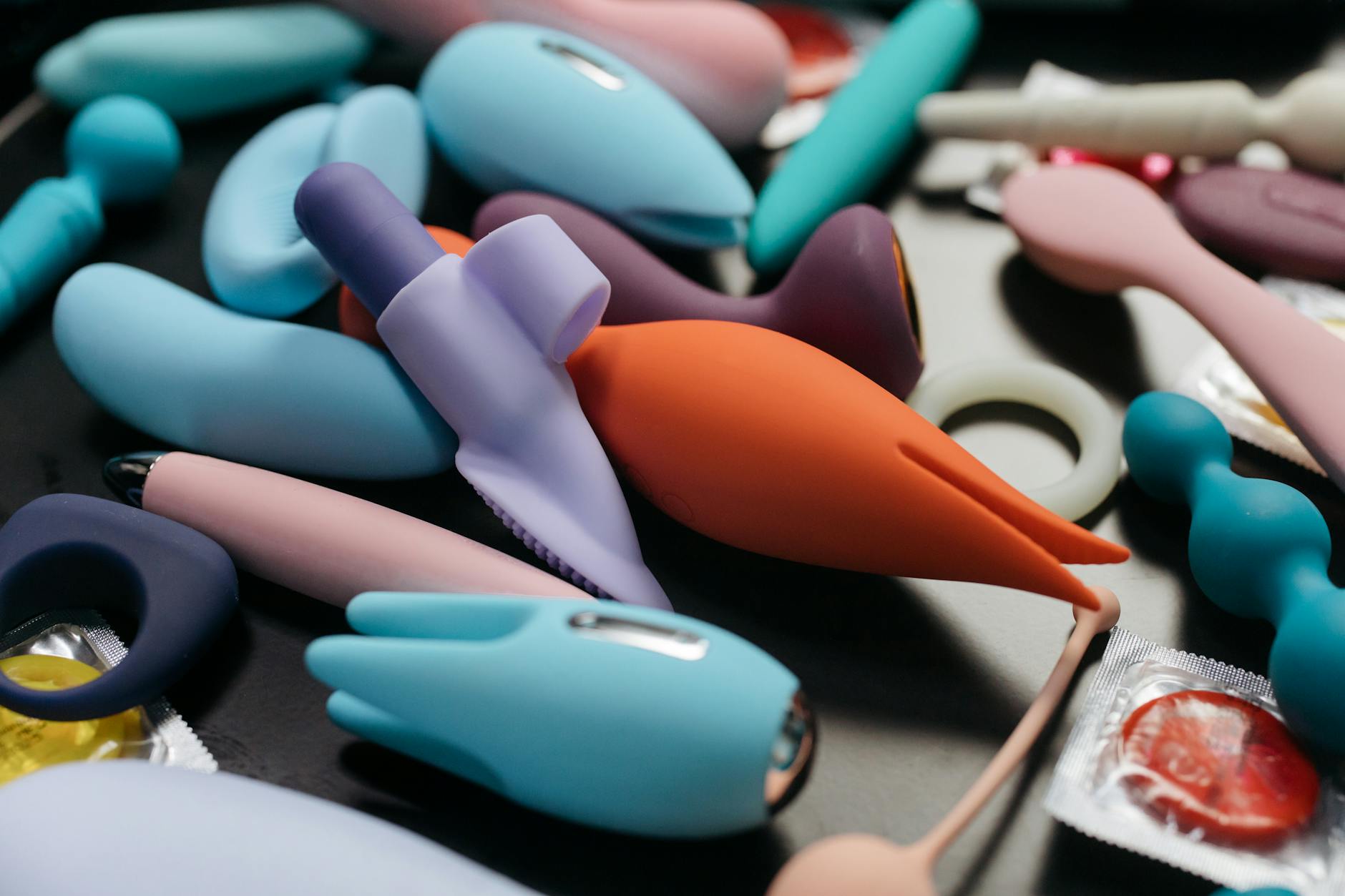
How to use lemon vibrators when you're nervous about partnered pleasure after sexual trauma
Let's start with the obvious thing nobody says clearly enough: rebuilding pleasure after sexual trauma is not about forcing yourself back into the same shape you were before. Your body remembers what happened. Your nervous system doesn't forget. And that's not broken. That's actually your body doing exactly what it's supposed to do.
What changes after trauma is not your capacity for pleasure. It's your relationship to control, safety, and vulnerability. And that's where lemon clitoral vibrators become genuinely useful. Not as a band-aid. As a tool for reclaiming agency in an intimate space.
Here's what I see in my practice: people who've experienced sexual trauma often feel trapped between two impossible choices. Either they avoid partnered sex entirely (which can work short-term but often deepens isolation), or they push themselves back into it before they're ready, which retraumatizes them over and over. A lemon vibrator doesn't solve that binary. But it does offer a third path.
Why control matters more than sensation
After trauma, sensation often feels dangerous before it feels pleasurable. Your threat-detection system is in overdrive. That's not a bug. That's a feature that kept you alive.
What changes that pattern is control. Not just physical control, though that matters. Emotional control. The ability to say "this is happening because I chose it," not because someone else is driving the experience.
Lemon vibrators are built with this in mind. You hold it. You move it. You set the intensity. Your partner doesn't initiate. They support. That shift from passive to active, from being stimulated to choosing stimulation, rewires the nervous system in ways that feel safer faster.
It's the difference between "my partner is touching me and I have to tolerate it" and "I'm using a tool while my partner is present." One is vulnerability. The other is agency with intimacy. Both can coexist.
Starting the conversation with your partner
Honestly, this is the hardest part. Not the vibrator. The words.
Your partner needs to understand three things before you try this together. First: this isn't about them. It's not "you're not enough." Second: this is about you choosing how pleasure happens. Third: their job is to follow your lead, not initiate or suggest next steps.
Say it plainly. "I want to try using a lemon clitoral vibrator with you because I need to feel in control of what's happening. I need you to wait for me to ask for you to touch me. I might change my mind midway through, and that's okay." A partner who loves you will get that immediately. If they don't, that's data.
One more thing: set a signal for "stop now." Not in a formal way. Just agree on a word or gesture that means "I'm done, and we're done." Knowing the exit exists makes staying feel possible.
The actual mechanics: how to start
Start alone first. Seriously. Not because partnered sex is the goal right now. Because you need to know what safety feels like on your own terms before you add another person to the equation.
Use a lemon vibrator by yourself. Low intensity. No pressure to orgasm. The goal is to notice what feels good without judgment. Twenty minutes of exploration with zero expectations is worth more than an hour of forcing yourself to perform pleasure.
Then, with your partner present (but not touching), do the same thing. They're just there. Maybe in the same room. Maybe in the next room. Knowing they're available without them being active changes everything.
After you're comfortable with that, try light touch. They might hold your hand. Or you might rest your head on their shoulder. Nothing below the neck. Just reminder that they're there and they're safe.
Only after all of that do you move toward them touching you with the vibrator in the picture. And even then, you hold it and move it. They're just nearby, following your lead.
Pacing: what you actually need to know
Trauma survivors often push too hard too fast because the shame of "not being normal yet" feels worse than the discomfort of pushing. I watch this pattern constantly. Someone says "I'm ready to try partnered sex," and six weeks later they're dealing with flashbacks they didn't need.
Here's what ready actually looks like: you can be in the same room with your partner while undressed without wanting to leave. You can be touched nonsexually for more than two minutes without your body tensing. You can say no without explaining yourself. Those are the real benchmarks.
Using a lemon vibrator works best when you're somewhere in that range. Not fully healed. Not fully ready. But curious and present.
Budget time differently too. Foreplay doesn't work the same way after trauma. That "let's escalate gradually" model assumes a linear arousal path. Your path might be start, pause, restart, pause again. That's normal. Your partner needs to know that before you start.
When sensation feels too intense or triggering
Sometimes during penetrative sex, even with a lemon vibrator as a focal point, something triggers. A smell. A sound. A feeling. Your body floods with adrenaline. This is not failure. This is information.
If it happens, you have options. You don't have to keep going. You don't have to finish. You can pause and just breathe together. You can get up and take a break. Your partner can hold you without any sexual element. None of these interrupt "real" intimacy. They are intimacy.
One thing that helps: keep the vibrator as an anchor point. If you feel triggered, intensifying that sensation (not dampening it) can sometimes ground you back in your body rather than in the memory. But that's individual. Some people need to stop entirely. Both are correct.
The role of your partner: supporting without taking over
Your partner's job during this process has a specific shape.
They notice when you tense and ask if you want to pause (not assuming). They wait for you to ask for touch, not initiating it. They don't perform pleasure for you. They witness your pleasure. They tell you "I'm here, you're safe, take your time" and they mean it. They don't view this as a temporary phase. They understand rebuilding pleasure is the work of months, not weeks.
What they don't do: offer suggestions for "what might help." Complain about the pace. Ask for reassurance that they're wanted. Rush to "normal" partnered sex. Use this as an opportunity to bring up their own needs.
If your partner can't do that, it's worth examining why. Sometimes it's immaturity. Sometimes it's their own trauma. Sometimes it's incompatibility. Whatever it is, it's valuable data about whether this relationship is actually safe enough to rebuild intimacy in.
Why lemon vibrators specifically help
Lemon vibrators have a particular design that matters here. They're suction-based, not just vibration. That difference means they work through a chain reaction in your nervous system that feels different from friction or direct vibration. Many people describe it as less invasive while still being intensely pleasurable.
They're also small and handheld, which means you stay in total control of angle, pressure, and intensity. You're not dependent on your partner's rhythm or strength. That autonomy is everything for someone rebuilding after trauma.
The pattern options also matter. With a lemon clitoral vibrator, you can start at level 1 or 2 and experiment with intensity without committing to high-impact stimulation. That gradual dial-up works better for nervous systems that are still recalibrating what pleasure feels like.
When to seek additional support
Using a lemon vibrator helps, but it's not therapy. If you're having flashbacks during sex, severe anxiety, or dissociation, that's a signal to work with a trauma-informed therapist alongside this physical exploration.
There are therapists who specialize in sexual trauma and intimacy specifically. They're worth finding. They can help you and your partner build a shared language around safety and pleasure that goes beyond what a tool can do alone.
You might also benefit from reading or listening to resources on trauma-informed sex together. Not as homework. Just as a way to know you're not alone in this process.
FAQ
How long does it typically take to feel comfortable with partnered pleasure again after trauma?
There's no timeline. Some people feel ready after three months. Others take two years. The pressure to move quickly is often deeper trauma (shame, urgency to "fix" things, fear of losing your partner). Let that pressure be a signal to slow down, not speed up. Comfort returns when it's safe, not on schedule.
Can using a lemon vibrator alone actually make partnered sex feel safer?
Yes, because you're retraining your nervous system to associate pleasure with control and choice. When you know what safety feels like on your own, it becomes easier to recognize and ask for it with a partner. That's not a coincidence. That's neurobiology.
What if my partner feels threatened by me using a lemon vibrator during sex?
That's worth addressing directly. Ask specifically what threatens them. Is it insecurity? Is it a loss of control? Is it fear that you're not interested in them anymore? Once you know the real fear, you can address it. But you don't negotiate away your safety or your right to pleasure to manage their emotions. If they can't work through that with you or a therapist, that's information about the relationship.
Is there a risk of becoming dependent on a lemon vibrator for pleasure?
No, not in the way people fear. You might prefer it. You might want it as part of sex going forward. That's not dependence. That's preference. It's the same as preferring certain positions or types of touch. Your pleasure patterns might have changed after trauma. That's not wrong. It's just different.
What if I'm afraid my partner will pressure me during sex even with a lemon vibrator?
Then your nervous system is telling you something real. That fear isn't irrational. It's your body saying "this person hasn't earned your vulnerability yet." You can either work on rebuilding that trust (with a therapist helping), or you can recognize the relationship isn't safe. Using a vibrator doesn't fix an unsafe relationship. It just adds a tool to an unsafe dynamic.
Can I use a lemon clitoral vibrator if I have numbness or sensation changes from trauma?
Absolutely. The suction-based design of lemon vibrators often works well when direct sensation feels dulled. Many people describe it as "waking up" sensation that had gone quiet. Start at the lowest intensity and give your body time to register what's happening. Sensation often returns gradually as your nervous system feels safer.
The actual goal here
You're not trying to get back to where you were before. That version of you existed in a different timeline. You're building something new, something that includes what you've survived and what you've learned about yourself along the way.
Using a lemon vibrator during partnered sex is one small tool in that bigger process. It works because it puts the control back in your hands. Literally. And that matters more than any pattern or intensity setting ever could.
If you're at the beginning of this path and feeling lost, that's normal. Reach out to a trauma-informed sex therapist or find a support group for survivors. You don't have to figure this out alone.