Here's the part nobody talks about
Breaking up after three months hurts differently than breaking up after three years. It's not less, but it's different. You had started building something, started imagining a future, started opening up physically and emotionally. Then it stopped. Your body remembers the closeness even if your brain knows it wasn't the one.
The strange part: you often feel more untethered than you would after a longer relationship. With a long-term breakup, you're grieving a full life. With an early one, you're grieving potential. And potential, weirdly, can feel more raw because it was never tested.
If sex was part of the relationship, your body is confused. You got used to being touched, desired, and intimate. Now that's gone. And there's often this weird voice that says: well, it wasn't that long, so you should be fine by now. You're not fine. Your nervous system doesn't care how long it lasted.
Why your desire went quiet (and why that's actually normal)
When you're dating someone new, a lot of your pleasure response is happening because someone else wants you. You're wired to respond to that mirroring. Your partner's desire creates a feedback loop that builds your own arousal. It's not shallow. It's biology.
When that person vanishes, that external feedback system shuts down. You're left looking inward for arousal signals, and your brain is busy running a loop of "wait, what happened?" Your nervous system is literally in a state of confusion because a stimulus it was used to is suddenly gone.
Add to that the fact that many people feel a little ashamed after an early breakup. There's a narrative that says three months is "too short to be this sad," so you suppress the grief, which also suppresses the pleasure. Pleasure and suppressed emotion don't coexist well.
Here's what matters: this is temporary. Your desire hasn't disappeared. It's sleeping.
The reconnection phase, not the jumping-back-in phase
Let's be clear about what solo pleasure is right now. It's not about having an orgasm and feeling better. It's about reminding your body that it belongs to you.
When you've been intimate with someone else, your body has been oriented outward. You were performing, responding, calibrating to another person's rhythm. Now you're reorienting inward. That takes a minute.
I recommend thinking of this in two phases. Phase one is reconnaissance. You're checking in with your body without any goal. No pressure to orgasm, no pressure to feel "sexy." You're just touching yourself the way you'd touch a friend's arm during a conversation. Light, curious, present. Spend a week or two here, honestly. Let your nervous system settle.
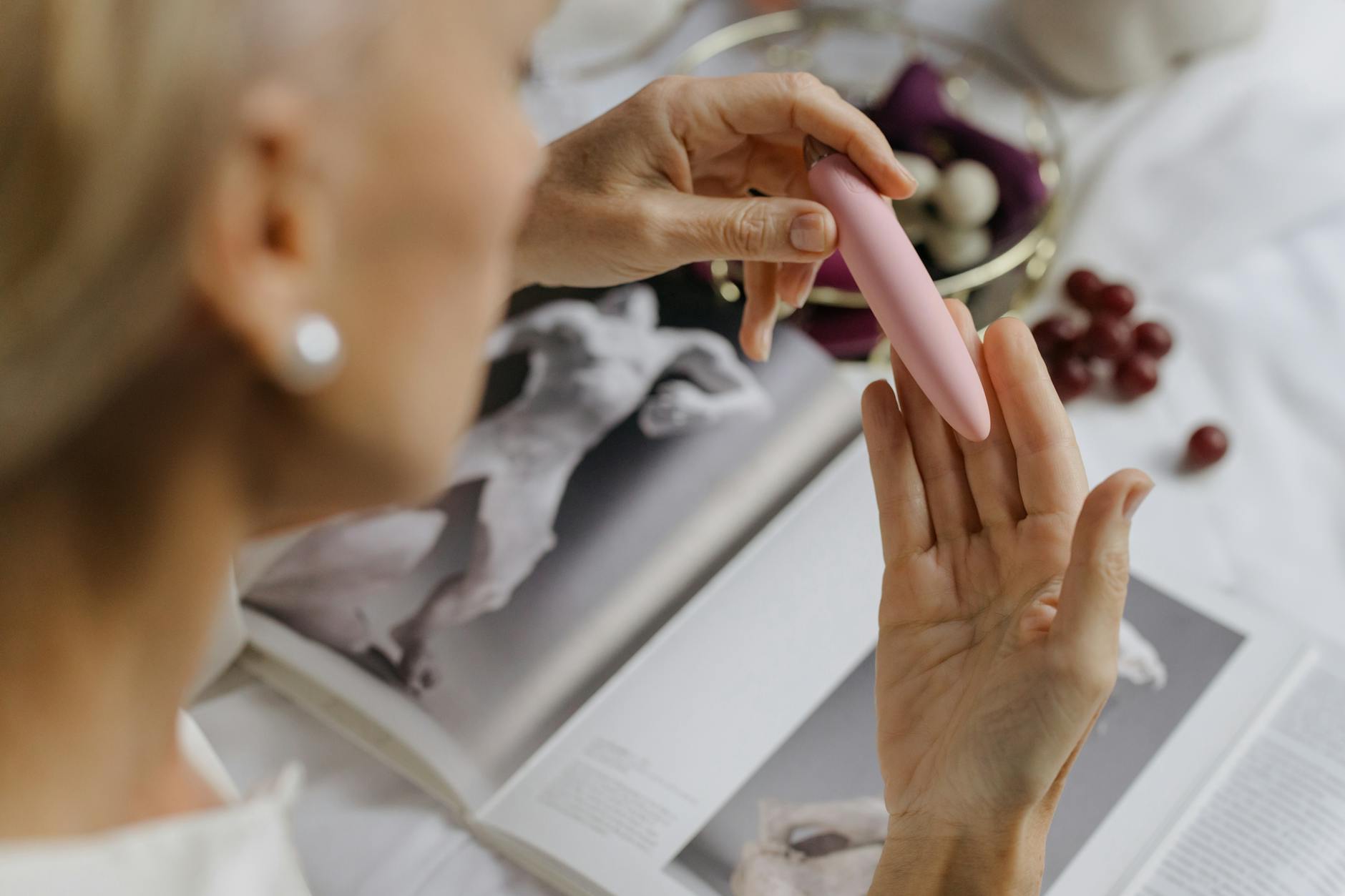
Phase two is reconnection. Once you're comfortable just touching yourself without agenda, that's when adding a tool like a Lemon Pleasure Toys vibrator makes sense. The vibrator isn't about forcing pleasure back. It's about sending a signal to your nervous system: this is safe touch on my terms.
How lemon vibrators help specifically
Clitoral vibrators work differently in early reconnection because they're not pretending to be a partner. They're not replacing the intimacy you lost. They're a tool that says: I'm taking care of this part of myself.
Start with a lower setting. If you're using a Lemon clitoral vibrator, begin at pattern one or two. Spend ten minutes just exploring sensation without trying to reach orgasm. You might feel numb at first. That's okay. Your body is slowly unpacking itself.
The beautiful part about suction-style stimulation, which many lemon vibrators offer, is that it doesn't require the same mental focus as penetration or traditional vibration. It's almost meditative. You can just let it work while you breathe. That mental ease matters when you're already emotionally tender.
The guilt and the shame piece (which is real)
Here's what I hear a lot: "I feel bad touching myself because it reminds me of what he wanted." Or: "I feel like I'm replacing him." Or: "It feels selfish when he's out there doing his thing."
All of that is normal grief-noise. It's not truth.
Your pleasure is not a referendum on the relationship. Using a vibrator is not infidelity by any definition. And your happiness or self-care has zero correlation to what he's doing or feeling right now. You're not supposed to pause your own life because his life changed.
Some of the shame also comes from this: you felt desire for someone who turned out to not want you back (or not in the way that mattered). That can make you distrust your own judgment, your own body's signals. So touching yourself feels like you're rewarding your own "mistake."
This is where self-compassion beats self-criticism by a mile. Your body didn't fail you. You weren't stupid. You opened up to someone. They couldn't stay. That's the size of the story. Solo pleasure now isn't about "moving on faster." It's about not letting one person's leaving convince you that your body is wrong or bad.
Timing, desire, and the patience part
Some people reconnect with solo pleasure in a few weeks. Some take three months. The timeline isn't a measure of how well you're healing. It's just how you're healing.
What matters is consistency without pressure. If you decide to explore pleasure solo a few times a week, that's better than forcing yourself into a daily habit. Your body reads frequency and gentleness better than intensity right now. If you use a lemon clitoral vibrator twice in a week and feel good, that's a win. If you get it out and realize you're not feeling it today, you're allowed to stop.
One thing I tell clients in this phase: your orgasms might feel different. They might be softer, quieter, less intense than they were with a partner. That's not regression. That's your body calibrating to solo stimulation versus partnered stimulation. They're literally different experiences. Neither is better. They're just different.
Some people find that solo pleasure gets more satisfying over time as they stop trying to replicate what they felt with someone else and just let themselves feel what they actually feel.
When to bring a partner back in (and what changes)
If you're dating again, there's often this pressure to prove that you're "over it" by jumping into sex quickly. That pressure is often total noise.
If you've been reconnecting with solo pleasure, you actually have a real baseline now. You know what your body feels like when you're the only variable. You know your own rhythm, your own sensitivity, what patterns help you feel present. That's powerful information to bring into a new relationship.
You don't have to hide that you're still healing. You don't have to rush. And you don't have to wait until you feel 100 percent ready, because healing doesn't work on a checkpoint system. You just move forward when you're ready enough.
Why solo pleasure is different after a breakup
Before I close, I want to name something: solo pleasure after a new relationship ends isn't about "getting over it." It's about reclaiming a part of yourself that got tangled up with someone else's presence.
When you use a lemon vibrator or any tool to reconnect with your own pleasure, you're not running from what happened. You're claiming the fact that your body and your desires belong to you, not to a relationship status.
Take your time. Be gentle. If using a clitoral vibrator brings up sadness, that's information, not a sign you're doing it wrong. Pleasure and grief can live in the same moment. Your body is smart. It will tell you what it needs.
People also ask
How long does it take to feel interested in pleasure after a breakup?
There's no standard timeline. Desire can return in weeks or months depending on your attachment style, how merged your identity was with the relationship, and whether you're processing grief actively. What matters is that you're checking in with your body without judgment. Some people feel a spark of interest within two weeks. Others need two months of gentle exploration before orgasm feels accessible again. Both are normal. If you're still feeling completely numb after four months and it's distressing you, that's worth talking through with a therapist.
Is it okay to use vibrators if I'm still thinking about my ex?
Completely okay. Your brain might wander to them while you're using a vibrator, and that doesn't mean you're "doing it wrong" or that you're not moving on. Breakup thoughts can pop up randomly, especially in quiet, intimate moments. If you notice that thoughts of them are preventing you from feeling pleasure, you might shift to a different time of day or a different setting. But the presence of memories doesn't mean you shouldn't be caring for your own pleasure.
Should I tell a new partner that I'm using vibrators to reconnect after a breakup?
Not unless you want to. Your solo pleasure practice is yours. That said, if you're starting a new relationship and you're using vibrators as part of solo reconnection, it's often easier to just integrate them naturally into partnered sex when you're ready. You don't need to confess anything. You're just using a tool that helps you feel good. Many partners find that attractive, actually.
Can using a lemon vibrator help me feel less numb after the breakup?
Numbness after breakup is usually your nervous system protecting you from overwhelm. Gentle, consistent touch (including vibrator use) can gradually help your nervous system learn that it's safe to feel again. But numbness doesn't typically disappear because you had an orgasm. It shifts gradually over time as you process grief, reconnect with friends, move your body, and yes, gently reconnect with your own pleasure. A vibrator is one tool in that bigger picture, not a cure on its own.
What if I feel guilty using a clitoral vibrator because it feels like I'm moving on too fast?
Guilt after early breakup is almost universal. You're touching yourself while they're out there hurting (or seemingly not hurting), and something in you says that's unfair. That's a grief response, not a truth. Your pleasure doesn't affect their healing. Taking care of your body isn't a betrayal. You're allowed to grieve and also touch yourself. You're allowed to miss them and also reconnect with your own desire. These things aren't mutually exclusive.
How do I know if I'm actually ready to explore pleasure again or if I'm just distracting myself?
If you're checking in with your body and you feel a genuine spark of curiosity (even if it's small), that's readiness. If you're trying to prove something, or if using a vibrator feels frantic or desperate, you might need a few more weeks. The difference is in the body. Genuine curiosity feels grounded. Distraction feels scattered. One invites you inward. The other pushes you away from the grief. Trust that distinction.
Final word
Your pleasure belongs to you. Not to the person who left. Not to a timeline. Not to anyone's judgment about whether three months was "long enough" to feel this way. When you reconnect with your own body and your own desire, you're saying: I am still here, and I still matter. That's not small. It's the foundation for everything that comes next. Start where you are. Take your time. You'll get there.