Let's talk about the pressure nobody mentions
You've just started something new with someone. The chemistry is there. The attraction is real. And then it's time to actually have sex, and suddenly you're hyper aware that your body isn't performing like it does when you're alone. Your partner's trying hard. You're trying hard. And nothing's happening at the speed either of you expected.
That's not a flaw. That's actually just how new partnered sex works.
Why orgasms take longer with someone new
When you're solo, your brain knows exactly what you like. Your body trusts the pattern. Arousal builds predictably. With a new partner, three things change at once.
First, there's unfamiliarity. Even if the touch feels good, your nervous system doesn't yet recognize it as a reliable path to climax. Your body's literally learning. Second, there's performance anxiety, even if you don't call it that. You're aware of being watched. You're calibrating how you look and sound. That mental load slows arousal down. Third, your partner's rhythm might not match your natural tempo. They go faster or slower than what would take you there.
None of this means the connection isn't working. It means you need a different tool.
How lemon vibrators actually solve this
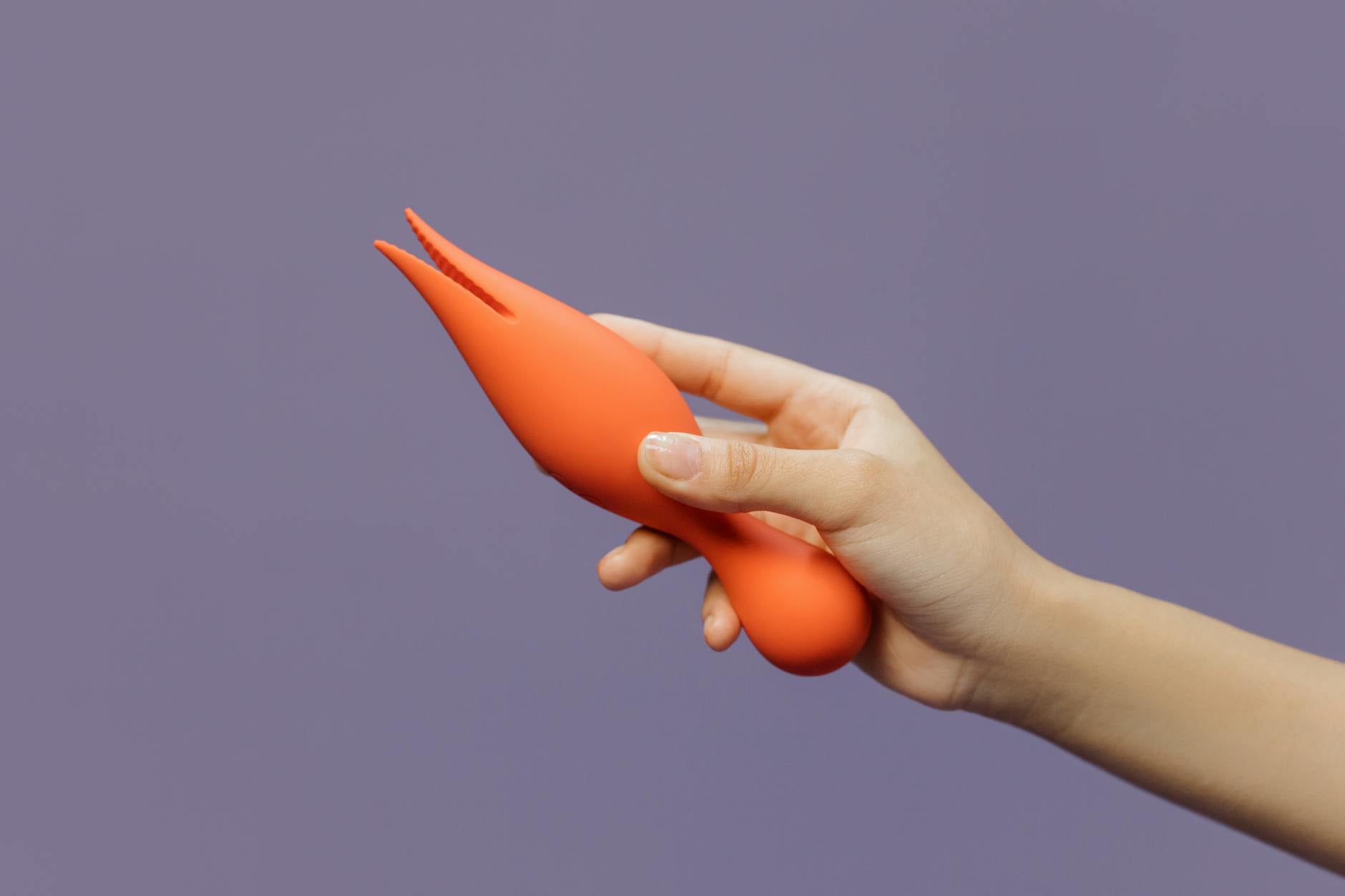
Here's what changes when you introduce a clitoral vibrator like the Lem into partnered sex. The toy does the direct stimulation work that your partner's body simply can't do at the right frequency and pressure. That frees both of you up to focus on what you're actually trying to build together.
Instead of your partner trying to provide clitoral stimulation while also managing penetration or their own sensation, the vibrator handles that job. Instead of you trying to chase your orgasm while managing their pleasure, you can actually feel what's happening between you. Orgasms stop being something you have to fight for and become something that happens because the right stimulation is there.
The Lem specifically works well here because it's designed for external clitoral use and doesn't require you to be in any particular position. Your partner can still be inside you, or you can be intertwined however feels right, and the vibrator slot fits without getting in the way.
The conversation that actually has to happen first
Introducing a toy doesn't work if it feels like a surprise or a criticism. It works when you've named what you both want. "I want to come when we're together" is a totally reasonable ask. It's not asking your partner to be better at something they can't control. It's asking for a tool that helps you both get where you want to go.
The frame matters. Instead of "I need help coming," try "I'd like to try something that might make this even better for both of us." Or just: "I come faster with a vibrator. Want to see?" Most partners are relieved to have a clear path forward instead of guessing.
If your partner seems resistant, that's usually about insecurity, not about the toy. Some people worry it means they're not enough. That's worth a separate conversation, not something to solve by abandoning the toy. You can't orgasm faster by pretending your body works differently than it does.
The practical setup that actually works
Position matters less than you'd think, but communication matters completely. Before you're mid-sex and figuring it out, spend five minutes actually talking about how you want this to work.
If you're the one holding the vibrator, you have the most control. You can angle it exactly where it feels right and adjust pressure in real time. Some people like to use it while their partner is inside them. Others prefer to have clitoral stimulation while their partner is using their hands or mouth elsewhere.
If your partner is holding it, make sure they understand the difference between "more pressure" and "faster speed." Most people assume you want more intensity when what you actually need is a different pattern. You might need to guide their hand the first time or two. That's normal. Bodies don't come with instruction manuals.
How to actually make this intimate instead of clinical
The fastest way to kill arousal is to make stimulation feel like a project. So here's the move: don't treat the vibrator like the main event. Treat it like part of the experience.
Keep eye contact. Keep talking. Kissing doesn't stop just because a toy is involved. Your hands are still on them. The emotional connection doesn't disappear. If anything, it deepens because you're both working toward something instead of one person performing for the other.
Start with lower intensity settings. The Lem has multiple patterns. You don't need maximum power to get there faster. You need the right sensation, which usually means starting gentle and building up. Many people find they come faster with a rhythm they can anticipate, not a shock of intensity.
Take breaks if you need them. Arousal isn't linear, especially early in a relationship. If you feel yourself getting tense or thinking too hard, pause. Get back into your body. Kiss. Touch. Then continue. Rushing the rush defeats the purpose.
The first time you try this will feel awkward
And that's completely fine. You're introducing a new element. Coordination takes practice. Your brain's probably asking three questions at once. That's all normal.
The second time will feel less weird. By the third or fourth time, it will feel natural. Your partner will start to understand what speed you need. You'll stop thinking about the mechanics and start thinking about the feeling.
If something doesn't work, change it. If the position feels uncomfortable, shift. If the vibration pattern isn't right, switch it. If the timing feels off, slow down. The whole point is that you both get to actually enjoy sex instead of just going through the motions.
When to use it and when to skip it
You don't need a vibrator every time. Some sessions will be quick and easy without one. Some nights you'll want to connect in other ways. That's healthy variation. The vibrator is there when you want to make sure orgasm happens, not as a requirement.
The sweet spot in a new relationship is using it maybe half the time. Often enough that you're both confident about what pleasure looks like together. Not so often that partnered sex without it starts feeling incomplete. You're building a whole relationship, not just borrowing a toy.
If you find yourself needing it every single time and feeling like sex is impossible without it, that might be worth exploring separately. Sometimes that's a sign of something else going on: anxiety, mismatched desire, or just still adjusting to each other.
The thing nobody tells you
Using lemon vibrators with a new partner actually teaches you something valuable about yourself. You learn what your body actually needs. You learn how to ask for it. You learn that pleasure doesn't have to be complicated or spontaneous to be real. And your partner learns that you're someone who knows what you want and isn't afraid to say it.
That's attractive. That's the opposite of performance pressure. And that's how new relationships turn into something that actually works.
People also ask
Will using a vibrator make my partner feel inadequate?
Only if neither of you talk about it first. Most partners feel relieved, not threatened, when they understand that a vibrator is a tool, not a comparison. You're not saying "you're not good enough." You're saying "here's something that helps my body do what I want it to do." If your partner does feel insecure afterward, that's worth a real conversation, but it's not a reason to skip the vibrator. His feelings and your orgasms aren't in competition.
How do I introduce the vibrator without it feeling awkward?
Just say it. "I'd like to try using a vibrator when we're together. I think it would help me come faster." You can show them beforehand if that feels less weird. You can laugh about it. The awkwardness you're imagining is usually way bigger than the actual moment. Most people just say "okay, cool" and move on.
What if I already have trouble orgasming and we're adding pressure?
Then the vibrator becomes even more useful because it removes some of the guesswork. If orgasm's already difficult, the last thing you need is your partner guessing about pressure and rhythm. A clitoral vibrator gives you direct control. You can experiment without the added layer of managing someone else's touch. Start with this if you know orgasm is challenging for you.
Can we use it if we're doing penetrative sex?
Absolutely. The vibrator handles clitoral stimulation while your partner handles penetration. That's actually one of the most common ways couples use them. You get fullness plus the targeted stimulation you need. Just make sure you're communicating about movement so nobody's fighting for the same space.
What if the vibrator keeps turning off or feels too intense?
Start on the lowest setting. The Lem has multiple patterns for a reason. You probably don't need power level 5 to start. And if it keeps cutting off, make sure it's charged and the power button is fully engaged. Sometimes it's just a connection issue, not a problem with the toy.
How do I know if this is actually helping or if we're just getting used to each other?
Both things are probably true. You're getting used to each other AND the vibrator is helping your body respond faster. That's not either-or. The point is that you're coming, you're enjoying it, and you're building good patterns together. The why matters less than the result.