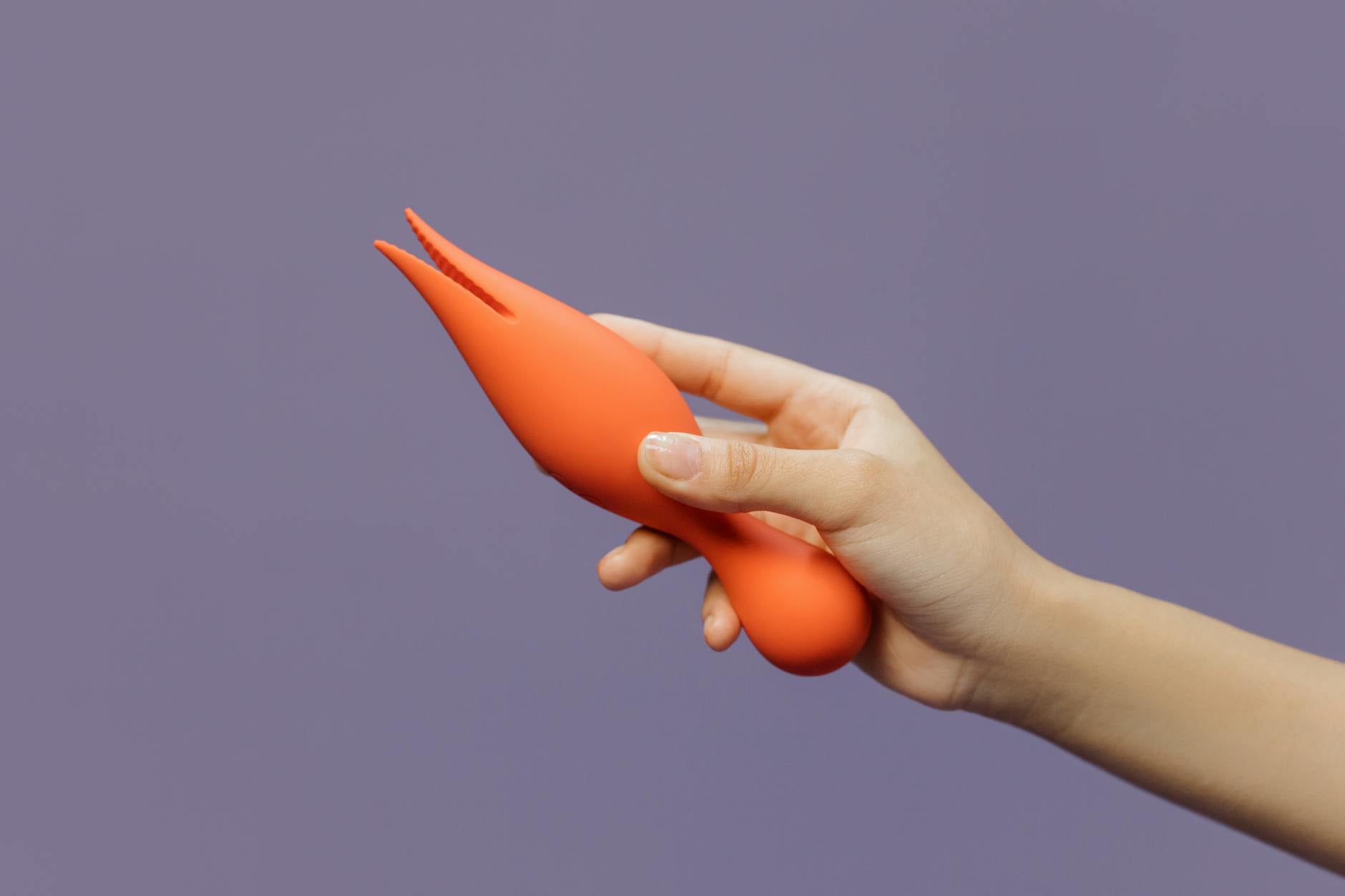
Let's start here: there is no "right way"
If you just unboxed your first lemon vibrator and you're wondering what happens next, take a breath. There's no performance standard. There's no "supposed to." This is about you learning what feels good on your body, at your pace, with zero pressure.
I've worked with hundreds of people discovering vibrators for the first time. The nervous ones aren't worried about pleasure. They're worried they're doing it wrong. Spoiler: you won't be.
Before you switch it on: three quick setup steps
First, charge it fully if it's new. Most lemon vibrators and clitoral vibrators from Hello Nancy arrive partially charged. Let it run for 2-3 hours before your first session so you're not chasing a dying battery halfway through.
Second, clean it. Warm water and a drop of mild soap. It's not a big deal, but it matters for comfort and hygiene.
Third, get somewhere you feel genuinely relaxed. Not stressed about being interrupted. Not performing for anyone. Locked door, phone on silent, no Netflix on in the background demanding your attention. Your brain is your most important pleasure organ. If it's distracted, your body won't respond the way it could.
Finding your starting point: position and pressure
Sit or lie somewhere comfortable. You'll want to experiment with positions eventually, but for your first time, pick whatever feels stable and easy. A pillow under your back, legs slightly apart, nothing cramped.
Start by exploring the shape of your vibrator against your body before you turn it on. Rest it gently against your vulva. Move it slightly. Notice what parts of the device feel best. Most people find that the tip or the curved end works better than the sides, but your body might surprise you.
This matters: you're learning your own map. That learning is the whole point.
Turning it on: start at the lowest setting
Every vibrator, including lemon clitoral vibrators like the Lem, has pattern or intensity settings. Start at pattern 1 or the lowest intensity. Not because you're delicate, but because you're building familiarity. It's easier to turn up from too-quiet than to dial down from overwhelming.
Press the button and feel what happens. You might notice:
- A gentle buzzing sensation
- A rhythm that's slower than you expected
- Some relief, some confusion, or nothing obvious yet
All of these are completely normal first reactions.
The next 5 to 10 minutes: stay curious, not goal-focused
Keep the vibrator at setting 1 or 2 for several minutes. Let your body get used to the sensation. This is not the moment to hunt for an orgasm. This is the moment to notice what your nervous system is doing.
Where does it feel most intense? The tip? The base? To one side? Move the vibrator slowly around to find your most sensitive areas. You're not looking for perfection. You're looking for information.
If nothing is happening, that's fine. Some people feel results within seconds. Others need 10 or 15 minutes of steady contact before arousal builds. Your body is not broken if it's the second type.
If it's uncomfortable, move to a different spot or lower the setting. Discomfort is data. Listen to it.
When to increase the intensity
Once you've spent a few minutes at lower settings, you can start exploring higher intensities. Go up one setting at a time. Spend another minute or two at each level so you understand what that feels like.
Most people find their sweet spot somewhere in the middle of the range. For many lemon vibrators and hello nancy clitoral vibrators, that's settings 4-7 out of 10. But your sweet spot might be gentler or stronger. There's no standard.
Rhythm and pressure: two variables to play with
Intensity is one dial. Pattern is another. If your vibrator has multiple patterns (steady pulse, ramp, flutter), try each one. Spend at least 30 seconds with each so you feel the difference.
Pressure matters too. Pressing the vibrator firmly against your body feels different from holding it lightly. Some days you might want firm contact. Other days, light touch is perfect. Both are normal.
What happens when you find your rhythm
At some point, you might feel arousal building. That's a warming, thickening sensation. Increased blood flow. Lubrication. Your body responding. That's the signal that what you're doing is working for you.
You can stay with whatever setting and pattern got you there. You can also keep experimenting and adjusting. This is your session. You're the only vote that counts.
Managing expectations: orgasm is not the only goal
Here's what I tell everyone in my practice: not every session with a vibrator ends in orgasm. Some do. Many don't. And that is completely okay.
Your first session might be about discovering sensation. Your tenth might be about relaxation. Your twentieth might be about exploring what happens when you use it with a partner. All of those are success.
Orgasm is a possible outcome, not a requirement. If it happens, wonderful. If it doesn't, you still learned something about your body. You still got pleasure. You still won. Read our complete guide to lemon vibrators if you want deeper context on technique and device options.
After you're done: care and storage
Turn the vibrator off and let it cool for a minute if it's been running a long time. Wash it again with warm water and soap. Dry it completely. Store it somewhere cool and dry.
Your vibrator doesn't need special treatment or a locked box. It's just a tool. Treat it like one.
Common first-time questions answered
Will my vibrator stop working if I use it a lot?
No. Regular use doesn't wear out a well-made vibrator. Modern silicone and electronic designs are built for frequent use. The more you use it, the more comfortable you'll become with it. That's the only thing that changes.
Is it normal to feel nothing the first time?
Completely. Arousal is partly physical and partly mental. If your brain is nervous or distracted, your body might not respond right away. This doesn't mean your vibrator is wrong or you're broken. It means you need a quieter environment or more time. Try again when you're genuinely relaxed.
Can I use a lemon vibrator with a partner present?
Yes, and many people do. Some couples explore it together. Others use vibrators solo and bring that confidence into partnered sex. There's no rule. What matters is that everyone's comfortable with whatever happens.
What if I orgasm really quickly?
That's not a problem. Quick orgasms, slow orgasms, multiple orgasms, no orgasm. Your body is working exactly as it should. Don't apologize for what feels good.
Do I need lubricant with a lemon clitoral vibrator?
Most people don't, but some do. The Lem and other lemon vibrators work great on their own for many people. If you find you want extra glide or if you have any dryness, water-based lubricant feels nice. It's totally optional.
How often should I be using my vibrator?
As often as you want. Once a week, once a day, once a month. Your pleasure doesn't have a schedule. Use it whenever it appeals to you. There's no such thing as too much.
The long game: building a practice
Your first session is just the beginning. With time, you'll discover which settings you love. You'll find out if you prefer certain patterns or if you like building up intensity slowly. You might learn that you enjoy vibrators during partnered sex, or you might find you prefer them solo. You might get curious about different devices. All of this unfolding is normal.
Pleasure is a skill you're learning about your own body. Every session teaches you something. Be patient with yourself. Your nervous system doesn't respond to impatience. It responds to curiosity and ease.
You deserve this. Not because pleasure is revolutionary or spiritual or any of that. But because you're here, you're interested, and your body matters. So does what feels good.