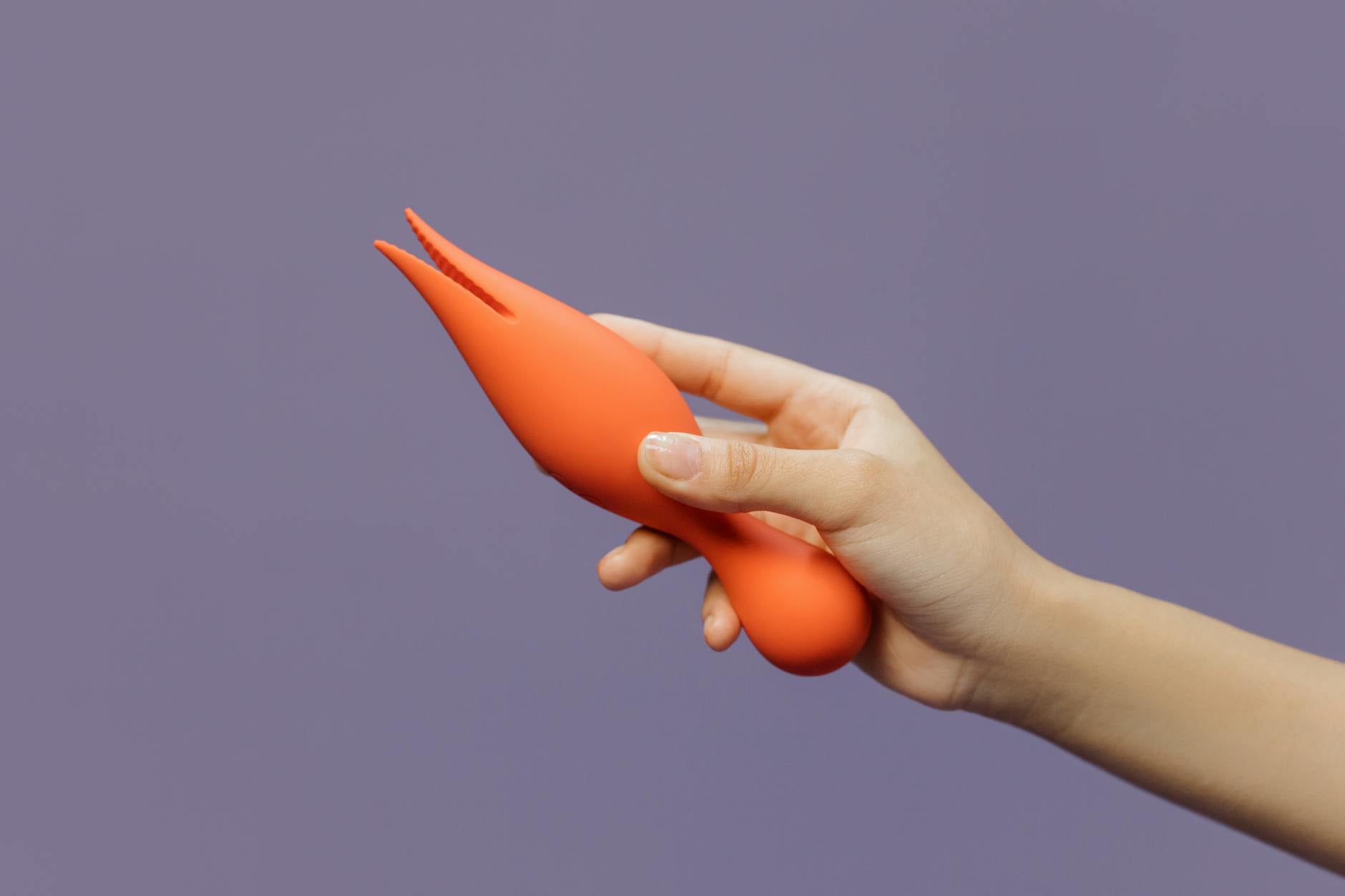
Let's be real about using a vibrator with someone else
Most people think introducing a lemon vibrator into partnered sex will feel awkward, clinical, or like a rejection of your partner. Here's what I see in my practice: it's actually the opposite. A lemon clitoral vibrator is an invitation to pay closer attention, to slow down together, and to stop pretending that one rhythm works for everyone's body.
If you're nervous about it, that's normal. If your partner hasn't suggested it but you want it, that's also normal. What matters now is how you frame the conversation and how you use it.
Why couples avoid the vibrator conversation
Three beliefs get in the way. First: "If I need a vibrator, it means my partner isn't enough." False. Your body's capacity for pleasure and your partner's effort are completely separate things. A lemon vibrator isn't a referendum on your partner. It's a tool that works with your body's actual wiring.
Second: "Bringing it up will make them feel inadequate." This one sticks around because many people equate penetration or manual stimulation with their own sexual competence. The fix is reframing. You're not asking for a replacement. You're saying: "I want to feel more during sex with you, and this helps me get there."
Third: "It'll feel weird or mechanical." It won't. After about 30 seconds, it stops being a thing and becomes part of what you're doing together. The sensation integrates fast.
How to bring it up without killing the mood
Don't do it during sex. Don't do it after a disappointing sexual experience. Do it when you're both relaxed, clothed, and there's no pressure for sex to happen right after.
The script that works: "I've been thinking about trying something that might feel really good for me during sex. It's a clitoral vibrator called the Lem. I wanted to see what you thought." That's it. You're naming the object, being specific, and inviting their input.
Their response might be: "Sure, let's try it," or "Tell me more," or even "I'm not sure about that." All of those are fine. If it's resistance, ask what the hesitation is. Usually it's one of those three myths above, and you can address it directly.
If they're into it immediately, great. If they need time to think, give them that space. Pressure doesn't help anyone.
The logistics: positioning and timing
The Lem works best during partnered sex when you're in a position where you can reach your clitoris easily. This means certain positions work better than others.
Positions that work well:
You on top or side-by-side penetration. You have the most control and easiest access to your clitoris. You can use the Lem while your partner is inside you, and the sensation stacks. Many people find this creates a totally different kind of orgasm than either sensation alone.
Partnered stimulation without penetration. This is criminally underrated. Your partner uses their hands or mouth on you while you use the Lem. This doubles the input and makes it harder to "finish too fast," which is a common couple's worry.
Foreplay before penetration. Start with the Lem during foreplay to get you closer to orgasm before penetration happens. This shortens the time needed during sex itself, which helps with timing mismatches.
Positions that are harder: if your partner is behind you or you're face-to-face in a way that blocks your access to your clitoris, the Lem becomes a logistical puzzle. Save those for when you're not using it.
Timing matters too. Use the Lem when you need it most, not randomly. If you usually take 15 minutes to build arousal, use it then. If you lose focus mid-sex, use it to reconnect. Pattern follows purpose.
The communication during sex (yes, really)
Your partner needs to know what's happening in your body. "Does this feel good?" is a real question, not a mood-killer. "Let's pause for a second" is fine. "A little deeper" is useful information.
When you introduce the Lem mid-sex, a quiet "This feels incredible" or "Don't stop" gives your partner real-time feedback. They're not competing with the vibrator. They're dancing with it. That's a totally different dynamic.
One thing I recommend: have your partner hold the Lem sometimes. This shifts the dynamic from "you're using a device" to "we're using something together." Your partner gets to feel the vibration through their fingers, gets to see your face up close, and participates more actively.
If your partner struggles with this, ask why. Often it's not actually about the vibrator. It's about control, or anxiety about performance, or something that deserves its own conversation. Don't let the vibrator become the scapegoat for a deeper mismatch.
When partnered vibrator use signals a bigger conversation
Sometimes adding a lemon clitoral vibrator to sex is just adding a lemon clitoral vibrator. Sometimes it's a symptom that you and your partner need to talk about desire, frequency, or physical intimacy more broadly.
If you're using the Lem because sex has become infrequent, the vibrator won't fix the infrequency. If you're using it because you feel disconnected from your partner, the vibrator won't rebuild that connection. Those conversations need to happen separately, ideally with a couples therapist.
But if you're using it because your body needs something specific to orgasm, or because you want to feel more pleasure during sex, or because you're curious about sensation? That's just good sexual communication. That's normal.
The practical care stuff
If you're using your lemon vibrator with a partner and there's penetration involved, keeping it clean matters. Wash it with warm soapy water before and after. If it's entering a body cavity, let it dry fully first. If you're switching between bodies, wash it in between. This sounds obvious, but I mention it because people skip this step and then wonder why infections happen.
Also: communicating about cleanliness takes exactly three seconds and requires zero judgment. "Let me clean this really quick" is not a mood-killer. It's hot, actually. It shows you care about both bodies in the room.
The afterglow part (don't skip this)
After you use a lemon vibrator with your partner, check in. Not with a full debriefing, but with a simple question: "That felt good. How was that for you?" This does two things. It gives your partner a chance to share if something didn't work or if they loved it. And it normalizes the vibrator as part of your sexual routine, not as a one-time experiment.
If it felt amazing, you'll probably do it again. If it felt awkward, talk about what would help. If your partner didn't orgasm but you did, that's okay. If your partner did orgasm and you didn't, also okay. The point isn't synchronized finishing. It's synchronized pleasure.
FAQ
Will using a vibrator with my partner make them feel less important during sex?
No. A lemon vibrator doesn't replace your partner. It works alongside them. Think of it like this: if your partner wore glasses to help them see you better, you wouldn't feel less important. You'd feel seen more clearly. Same logic applies.
What if my partner is uncomfortable with vibrators but I really want to use one?
That's a real incompatibility that deserves honesty. You can explore why they're uncomfortable. But you also get to decide what you need for your own pleasure. If this is important to you and it's a dealbreaker for them, that's information. Sometimes the answer is couples therapy. Sometimes it's accepting the limitation. Sometimes it's reconsidering the relationship.
How do I introduce a vibrator if we've been together for years and never talked about it?
The longer you've been together, the scarier this feels. But actually, long-term partners often handle this better than newer couples because you have trust built in. Start with "I've been thinking about trying something new sexually," which frames it as growth, not criticism of the past. Then follow the conversation script above.
Can I use my lemon vibrator during all positions?
No. You need access to your clitoris, which rules out some positions. Side-by-side, you on top, and many variations of those work best. Positions where your partner is fully behind you or where you're lying face-down make vibrator use complicated. Plan positions around what you need.
What if I orgasm with the vibrator but my partner doesn't?
That's fine. Orgasm isn't a synchronized event. You getting there isn't a failure on your partner's part, and them not getting there isn't a failure either. If this pattern bothers one of you, that's a different conversation worth having together.
Is it weird to ask my partner to hold the vibrator for me?
Not even a little bit. Many people find this hotter than using it alone because it involves your partner more actively. It shifts from "you're doing your own thing" to "we're doing this together." Try it and see.
The real thing
Adding a lemon vibrator to partnered sex isn't about fixing something broken. It's about leaning into what works for your body and inviting your partner into that. The best sex isn't about doing what you think you're supposed to do. It's about doing what actually feels good, together, without performance pressure.
Your partner probably wants you to feel good. Showing them exactly how, with a tool that helps, is a gift to both of you. That's how pleasure works in a real partnership.