
Let's talk about the arousal timeline nobody mentions
Here's what changes after 40: the speed shifts. What used to happen in five minutes now takes fifteen or twenty. And then we tell ourselves something's wrong. Spoiler alert. Nothing is wrong. Everything's just different, and honestly, that difference is where lemon vibrators completely change the game.
The frustration is real. You're with a partner you love. You want to want them the way you used to. But the body's signaling system has rewired itself. Arousal still happens. It just doesn't announce itself the same way anymore.
Why arousal slows down after your early forties
Three physiological shifts happen simultaneously.
First, blood flow to the genitals takes longer to build. Estrogen levels fluctuate (even if you're not fully menopausal yet), and estrogen is what primes the tissue to swell and flush. Less estrogen means slower vasocongestion. That's just biology.
Second, your nervous system has become more refined about threat detection. This isn't a bug. It's actually a feature. By 40, your brain has learned to filter out low-signal stimuli. Which means random touching that used to register as "ooh" now registers as "who is touching me and why." Specificity wins over ambiguity. Intention matters more than spontaneity.
Third, the cues that used to trigger arousal may have shifted entirely. A partner's smell, the angle of their touch, the timing of your cycle. These variables change. And our culture teaches us to panic when arousal feels slower rather than recognizing it's just recalibrating.
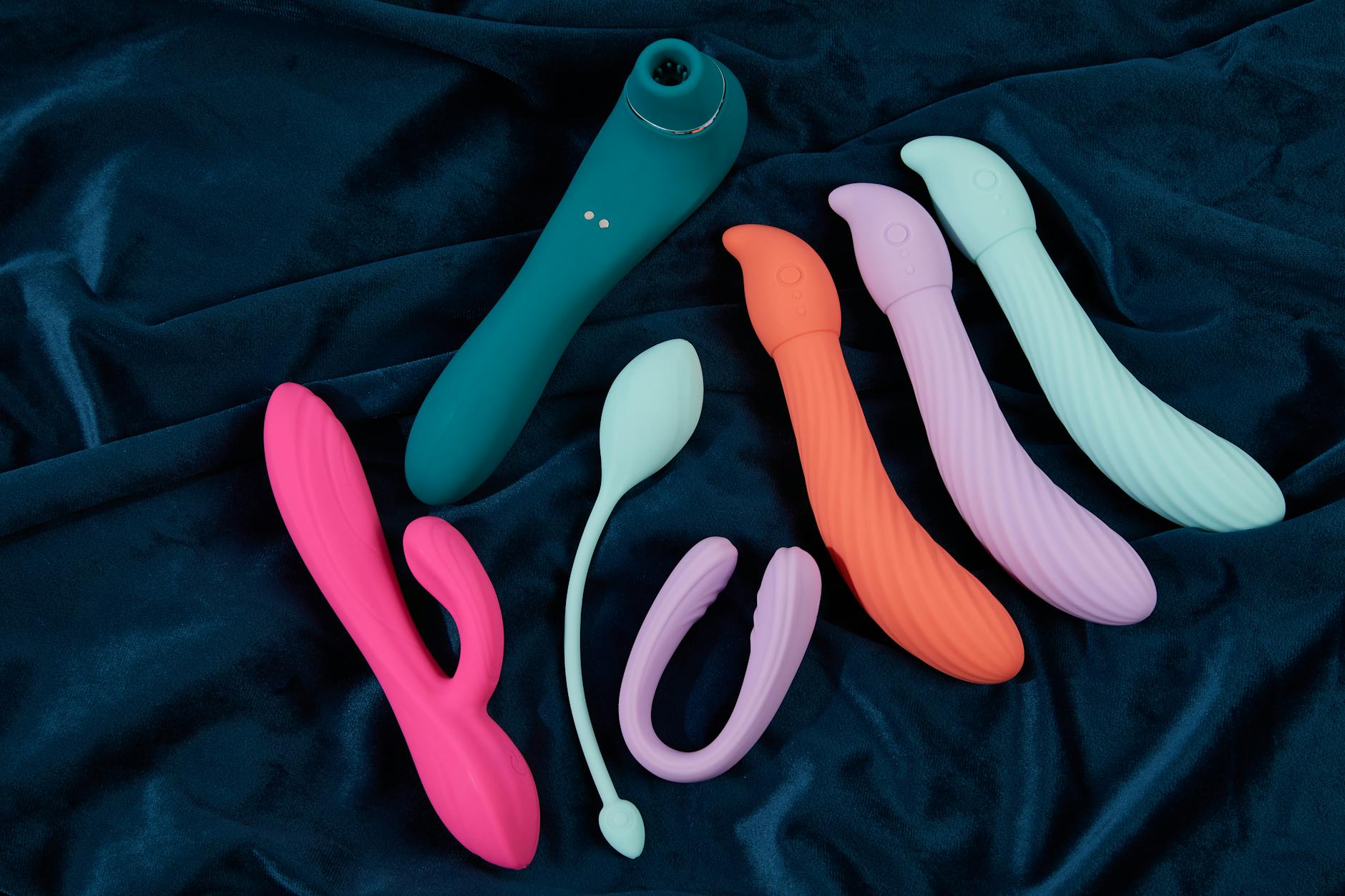
Photo by IFONNX Toys on Pexels
The actual advantage of a slower arousal timeline
Let me flip the frame. A slower arousal timeline has a gift built into it.
When arousal takes longer, you have more time to notice what actually works for your body right now. You can feel the difference between surface sensation and deep satisfaction. You can track when desire peaks versus when it plateau. That information is gold.
A lemon vibrator's suction mechanism is specifically useful here because it doesn't require the same genital engorgement that traditional vibration does. You can build arousal gradually with the Lem without waiting for your body to reach some threshold of readiness first. The suction stimulates nerve endings directly, bypassing the blood-flow timeline entirely.
Which means you're not fighting against your body's pace. You're working with it.
How lemon suction vibrators reshape the slower build
Here's where lemon clitoral vibrators become your strategic advantage.
Traditional vibration requires tissue that's already engorged. If you're ten minutes into foreplay and your clitoris hasn't swollen yet, the vibrator might feel harsh or overstimulating because you're applying intensity to tissue that's not ready. So you wait. And waiting triggers performance anxiety, which triggers cortisol, which kills arousal even faster. Now you've got a biological stalemate.
A lemon vibrator works differently. The rhythmic suction sensation engages the clitoris without requiring full vasocongestion first. You can start at lower intensity patterns (the Lem has eight of them) and let the sensation itself build arousal gradually instead of waiting for arousal to happen and then applying a tool.
It's not a subtle difference. It's the difference between chasing arousal and inviting it.
Most of my clients over 40 report that starting with pattern one or two on a lemon vibrator actually accelerates their arousal timeline because they're no longer anxious about whether it's "happening fast enough." The anxiety drops. The arousal accelerates. The body responds.
What slower arousal actually buys you
A longer arousal window isn't a limitation. It's a threshold for deeper sensation.
When arousal builds slowly, you're more likely to experience what I call "stacked pleasure." That means multiple layers of sensation happening at once. Not just genital pleasure, but the warmth of a partner's touch, the sound of their breathing, the mental load of anticipation building. These don't layer when arousal happens in a flash. They layer when arousal has time to expand.
The research backs this up. Studies on aging and sexuality show that people who stop rushing the arousal phase report higher orgasm intensity and greater satisfaction overall. Which means the slower build isn't a compromise. It's an upgrade.
Lemon vibrators help because they give you permission to take time. You're not waiting passively. You're actively building sensation with a tool that's designed to work with your current timeline, not against it.
How to use a lemon vibrator when arousal is slow
Four practices that work for most people over 40.
Start earlier than you think you need to. Don't wait until you feel aroused to pick up the lemon vibrator. Use it as part of the foreplay itself. Ten minutes of light suction sensation can actually prime your nervous system for pleasure in a way that waiting does not.
Begin at the lowest intensity. The Lem starts at pattern one. Stay there for three to five minutes. Your body is learning what this sensation feels like in your current neurological state. Rushing to higher patterns defeats the point.
Layer in other sensation while you're using the vibrator. Your partner's hands elsewhere, a particular smell or sound, temperature play. When arousal is building slowly, these elements matter wildly more than they did when arousal used to flash on instantly.
Communicate about the timeline shift explicitly. Tell your partner, "I need about twenty minutes of buildup now, and that's actually better for me." This removes the silent questioning that kills arousal. Everyone knows what's happening. Everyone can relax into it.
When to worry about arousal changes (and when not to)
A slower arousal timeline at 40 plus is normal. That's not the moment to panic.
Panic when arousal disappears entirely and hasn't come back in several weeks. That's worth a conversation with a doctor about hormones or medication side effects. Panic when arousal happens but orgasm becomes impossible. Panic when pain shows up where it didn't exist before.
Don't panic when the timeline just shifts. Don't panic when arousal needs different triggers. Don't panic when your body wants something it didn't used to want. These are recalibrations, not regressions.
The lemon clitoral vibrators are particularly useful for people navigating these transitions because they don't require you to be at a certain physiological state to start. You can literally begin whenever and let the sensation do the work.
The pleasure paradox of getting older
Here's something I've observed across two decades of coaching: people who resist the slower arousal timeline at 40 plus typically report lower satisfaction. People who lean into it, who use tools like lemon vibrators designed for the actual pace of their bodies, report some of their best pleasure ever.
The shift isn't a loss. It's a door opening to a different kind of intimacy. One that requires attention, intention, and the willingness to let your body teach you what it needs now instead of five years ago.
FAQ
How much slower does arousal actually get after 40?
It varies person to person. Some people notice a shift by 40. Others not until 50. The average is that arousal takes two to three times longer to build than it did in your twenties and thirties. Instead of five to ten minutes, budget fifteen to twenty-five. The important part isn't the exact timeline. It's knowing it's shifted so you can work with it instead of against it.
Can a lemon vibrator really speed up slow arousal?
It works differently than "speeding up." The suction sensation from a lemon clitoral vibrator engages neural pathways that don't require your tissue to be fully engorged first. So instead of waiting for arousal to happen and then applying a tool, you're applying the tool early and letting it generate arousal. That feels faster psychologically, and it often is faster practically.
Is slower arousal a sign that something is broken with my body?
Not at all. Slower arousal is one of the most common physiological changes after 40. It's completely normal and actually quite common across bodies assigned female at birth. The only time it's worth investigating medically is if arousal completely disappears or if it's accompanied by pain. A slower timeline by itself is not a red flag.
Should I be using a lemon vibrator every time, or can it be occasional?
Use it however serves your pleasure. Some people use lemon sexual toys regularly as part of their routine. Some use them occasionally when they want to explore sensation or when arousal is particularly slow that day. There's no "right" way. The point is having a tool that works with your body's current pace, not forcing your body to match an arbitrary standard.
Can a partner help with slower arousal, or is a lemon vibrator necessary?
Partners absolutely help. But the reality is that many partners don't know what to do with a slower timeline either. They interpret it as rejection or waning desire. Having a lemon vibrator gives you both something concrete to do together. Your partner can hand it to you. You can use it while they touch you elsewhere. It transforms the slower timeline from a source of anxiety into a shared experience.
Does arousal eventually speed back up, or is this permanent?
It depends on hormonal fluctuations and life stress. Some people find arousal speeds up slightly if they start hormone therapy. Some find it stays slow but gets more reliable. The point isn't forcing it back to your twenties pace. It's finding tools and practices that work beautifully with your current baseline. Lemon vibrators help because they don't require arousal to be fast. They just require presence.
The timeline shift is not an ending
I think about the shift in arousal after 40 as the beginning of a different conversation between you and your body. That conversation gets richer when you're using the right tools. A lemon vibrator isn't a workaround for something broken. It's a tool built for the actual experience of pleasure at this point in your life.
Your arousal didn't break. It just invited you to pay more attention. And that invitation, when you accept it, leads to pleasure that's often deeper and more consistent than anything that came before.